2026 hasn't been kind to Anbernic. The RG Vita launched with promise but delivered disappointing performance — it can barely handle Vita games, making it feel like a missed opportunity for a potentially legendary device. It's a pattern with Anbernic: the RG DS had a rough launch too. It took software updates after release and the intervention of GammaOS to make it a device worthy of consideration. It's a reminder that innovation and solid emulation expertise don't always go hand-in-hand, and that execution matters as much as ambition.
But rather than dwell on what went wrong, here are three devices we'd love to see Anbernic actually pull off — concepts that would address real gaps in the market and prove they can learn from their stumbles and launch with proper execution from day one.
1. The Shield Controller: A Fold-Down Screen in a Controller Form Factor
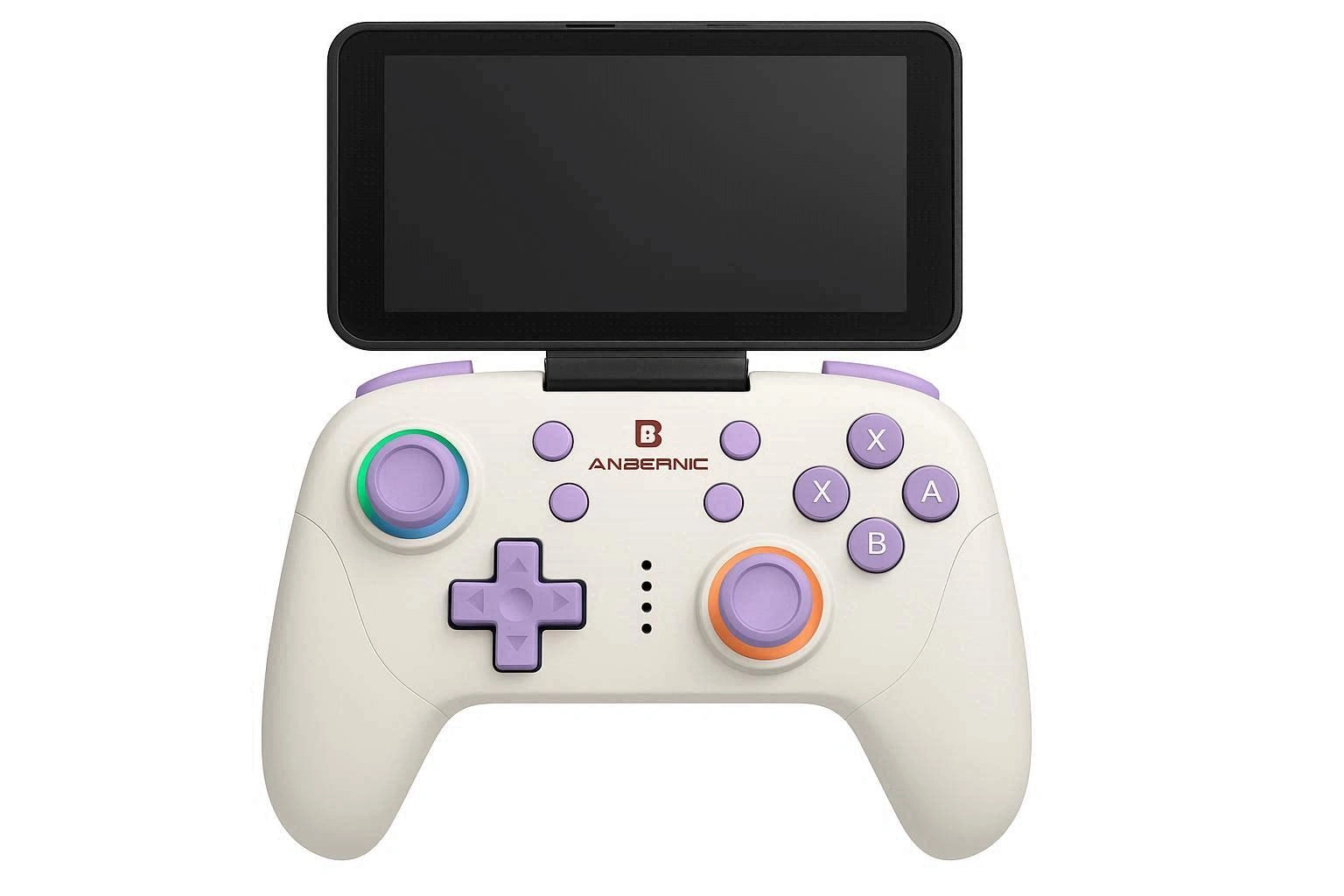
NVIDIA's Shield Portable was ahead of its time — a full-featured gaming handheld disguised as a controller. We haven't seen many devices since then combine that controller ergonomics with a built-in screen.
Imagine an Anbernic device: a standard controller-style grip with a 4-5 inch landscape screen that folds down flat against the body when not in use. The screen becomes the back of the device, protected by the shell on both sides. It's the ergonomics of holding a real controller with the self-protection of a clamshell, without the extra thickness when closed.
Why this works:
- The controller grip is genuinely more comfortable for long gaming sessions than a slab-style handheld
- A folding screen automatically protects itself from scratches and drops
- It solves the "I want a handheld that doubles as a controller" problem
- Modern flexible screen technology makes this more feasible than it was in 2012
This device would fill an interesting niche in Anbernic's lineup — something genuinely portable with great ergonomics and built-in protection for the screen.
2. The Wii Console Portable: Detachable Controllers and Motion Controls

The Nintendo Wii was staggeringly popular. It moved 101 million units. Yet despite its massive cultural impact, the Wii gets almost zero attention in the handheld retro emulation space. The console is begging for a portable.
An Anbernic Wii portable would be unique: a handheld device with a 5.5-inch screen and detachable controllers on either side. Think Switch, but with proper motion controls built in. The screen would remain in the center while the controller modules slide off to become actual Wii remotes with motion sensors.
Why this matters:
- Wii Emulation (Dolphin) is solid but wired controllers are clunky. A wireless, properly integrated handheld changes that
- The Wii has an entire generation of nostalgic games that deserve a proper handheld port
- Motion controls make Wii games actually playable in a handheld format (something the stock emulation doesn't handle well)
- A bigger screen lets you play Wii games at reasonable sizes with proper controls
Yes, this is ambitious. Yes, motion sensors add cost. But there's an underserved market of people who want to play Wii Sports, Wii Fit, and Mario Kart Wii without being tethered to a console or dealing with janky emulator configs.
3. The RG28xxV: A Vertical Form Factor Update
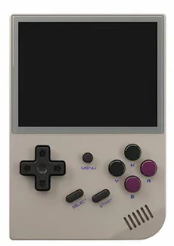
The Miyoo Mini ruled the pocket-sized handheld space for years. Now that Miyoo has stopped making them, we need a spiritual successor — something Anbernic could provide with a vertical form factor device.
Picture the RG28xxV: a true pocket device with a vertical orientation. A 2.8" display (matching the RG 28xx) with solid power under the hood. Small enough to fit in a shirt pocket, large enough to play classic games comfortably in a portrait format.
Why this would hit differently:
- The Miyoo Mini's success proved there's a huge market for "fits in a shirt pocket" devices
- Vertical form factors are genuinely more comfortable for one-handed play
- A 2.8" vertical screen is sufficient for NES, Game Boy, and early retro games
- A compact size doesn't mean weak performance — modern chips are small and powerful
- It fills the gap left by Miyoo's exit from the market
The Ask
Anbernic, if you're reading this: the RG DS showed you have ambition, but 2026 proved that execution is harder than it looks. The market still needs innovators. These three concepts wouldn't require reinventing the wheel — just smarter design and a return to focus.
The handheld market is wide open right now. Room for anyone willing to get it right. We're still waiting.
And if you don't, I'm calling MagicX. Their design team is clearly unfiltered.